
Knowing When to Call a Professional: DIY vs. Expert HVAC Repair
HVAC Repair Guide TX | DIY vs Professional Fixes
Scroll down to discover more

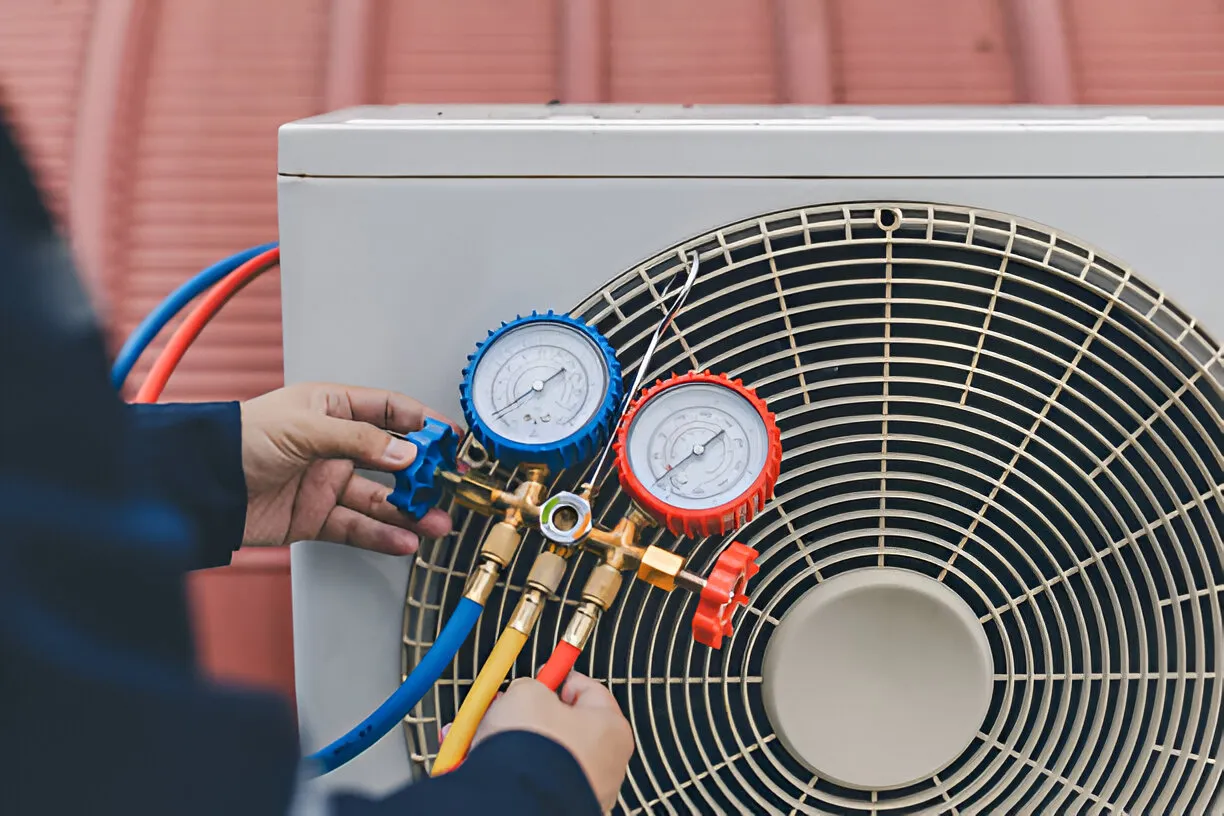
HVAC Repair: The Smart Homeowner's Guide to DIY vs. Calling a Pro
When your air conditioner quits on a sweltering Montgomery afternoon, the first thought that often comes to mind is, "Can I fix this myself?" It’s a valid question. The idea of saving a few hundred dollars is tempting, and for some simple issues, a DIY approach makes perfect sense. But the line between a quick fix and a costly mistake can be incredibly thin.
Making the right choice comes down to a simple framework: an honest assessment of your Tools, Time, and Tolerance for Risk. This guide is designed to help you make that assessment confidently. We'll walk you through the tasks you can safely tackle and highlight the critical red flags that mean it's time to put down the tools and call a professional.
The DIY HVAC Checklist: What You Can Safely Handle
For homeowners who enjoy a bit of hands-on maintenance, a few routine tasks can keep your system running efficiently and even prevent larger problems down the road. These are generally low-risk and require minimal specialized tools.
- Changing Your Air Filter: This is the single most important maintenance task. A clogged filter restricts airflow, forcing your system to work harder, driving up energy bills, and potentially leading to a frozen evaporator coil.
- How-To: Locate the filter slot on your indoor unit, slide the old one out, note the size, and slide a new one in, making sure the airflow arrow points in the correct direction. Do this every 1-3 months.
- Cleaning the Outdoor Unit (Condenser): Your outdoor unit can get clogged with leaves, grass clippings, and dirt, which prevents it from releasing heat effectively.
- How-To: Turn off the power to the unit at the breaker box first. Use a garden hose (never a pressure washer) to gently spray down the fins from the inside out to remove debris.
- Clearing the Condensate Drain Line: This PVC pipe drains moisture from your indoor unit. If it gets clogged with algae and sludge, water can back up and cause significant water damage.
- How-To: Find the drain line's access point (usually a T-joint with a cap). Pour a cup of distilled vinegar down the line every few months to break up any buildup.
- Basic Thermostat Troubleshooting: Before assuming the worst, check the obvious. Ensure your thermostat is set to "cool," the temperature is set below the current room temperature, and the batteries are fresh.
If your problem persists after checking these items, you're likely dealing with something more complex.
Red Flags: When to Stop Immediately and Call a Professional
This is where your risk assessment becomes critical. While competitors might offer tutorials for more complex fixes, they often downplay the serious safety and financial risks involved. The following symptoms are clear indicators of a problem that requires a licensed technician's expertise. Attempting to fix these issues yourself is dangerous and can lead to catastrophic system failure.
- Burning Smells or Smoke: An acrid, gunpowder-like smell often points to a fried circuit board or a short in the motor wiring. Turn off your system at the breaker immediately to prevent a potential fire hazard.
- Loud, Metallic Noises: Grinding, squealing, or clanking sounds signal a serious mechanical failure. This could be a broken motor bearing, a bent fan blade, or a failing compressor. Running the system in this condition will only cause more damage.
- Constantly Tripping Circuit Breaker: The breaker is a safety device. If it keeps tripping when your HVAC kicks on, it means the system is drawing too much power. This could be due to a failing motor or a short circuit. Simply resetting it over and over is not a solution, it's a fire risk.
- Visible Ice on Your Coils: Ice buildup on your indoor or outdoor coils is not normal. It's usually a symptom of either restricted airflow (like a dirty filter) or, more seriously, a refrigerant leak.
- Hissing Sounds or Oily Residue: These are telltale signs of a refrigerant leak. Refrigerant is a controlled chemical that is harmful to you and the environment. Handling it requires specialized equipment and an EPA certification.
The Hidden Costs of a DIY Mistake
The desire to save money is understandable, but a failed DIY repair often costs far more than a professional service call would have. Competitor sites rarely discuss these crucial financial implications that every homeowner needs to consider.
Can a DIY Repair Void Your HVAC Warranty?
Almost certainly, yes. Most manufacturer warranties for major components like compressors and motors stipulate that all service and repairs must be performed by a licensed HVAC professional. If a part fails and the manufacturer sees evidence of tampering or an improper DIY repair, they will likely deny the warranty claim, leaving you to foot the bill for a part that could cost thousands of dollars.
Turning a Small Fix into a Major Expense
Many online videos make replacing a capacitor look simple. But what they don't tell you is that installing a capacitor with the wrong voltage or microfarad rating can permanently damage your fan motor or even the compressor. You might have saved $150 on a service call to replace a $20 part, only to find yourself needing a $1,500 motor replacement a week later.
What to Expect When You Call for Professional HVAC Service
We understand that calling a service company can feel like a gamble. You're worried about high-pressure sales tactics and surprise charges. That’s why we believe in complete transparency. Demystifying the process reduces anxiety and builds the trust you deserve.
When you call Stat Air Care, here’s what you can expect:
- A Clear Conversation: We listen to the problem you're experiencing and schedule a visit that works for you.
- Thorough Diagnosis: When our technician arrives for your
HVAC repairappointment, they perform a comprehensive diagnostic, not just a quick guess. We use specialized tools to find the root cause of the problem. - Plain English Explanation: We show you what we’ve found and explain the issue clearly, without confusing jargon. We’ll outline your options, whether it’s a simple repair or, in some cases, if it makes more financial sense to consider a system
replacement. - Upfront, Honest Pricing: Before any work begins, you receive a clear, detailed quote. You approve the price before we pick up a single tool, so there are never any surprises on your bill.
- Expert Repair & Verification: We use high-quality parts to perform the repair correctly the first time. Afterward, we test the entire system to ensure it's operating safely and efficiently, which can also be a good time to discuss ways to improve your home's
indoor air quality.
Frequently Asked Questions
Is it really cheaper to call a pro than to risk a DIY mistake?
For anything beyond basic cleaning and filter changes, yes. The cost of a professional service call is a fixed, known expense. The potential cost of a failed DIY repair, factoring in replacement parts, voided warranties, and potential safety hazards, is unknown and can be exponentially higher.
My AC isn't cooling well. Can I just add more refrigerant from a can?
Absolutely not. First, your AC is a closed system; if it's low on refrigerant, you have a leak that needs to be located and repaired. Second, adding the wrong type or amount of refrigerant can destroy your compressor. Only EPA-certified technicians are legally allowed to handle and charge refrigerant.
How do I know I can trust a technician's diagnosis?
A trustworthy technician will take the time to show you the problem and explain why a specific part has failed. They should provide a clear, itemized quote and never pressure you into an immediate decision. At Stat Air Care, our reputation in the Montgomery community is built on this foundation of transparency and respect.
Making the Confident Choice for Your Home
Empowering yourself with knowledge is the best thing you can do for your home's HVAC system. Handling routine maintenance is a smart way to protect your investment. But recognizing the limits of DIY is even smarter.
When you're facing strange noises, electrical issues, or signs of a leak, you're no longer in the realm of simple maintenance. You're dealing with a complex system where a small mistake can have big consequences.
If you're facing an HVAC issue that goes beyond the basics, make the safe, cost-effective choice. Contact the trusted professionals at Stat Air Care. We’re here to provide an honest diagnosis and expert repair to restore your comfort and peace of mind.
Hear What Our Satisfied Clients Have To Say

Ready to Transform Your Home?
Get inspired to enhance your living space with practical tips and expert advice. Ready to transform your home into a comfortable, stylish, and efficient haven? Start your journey today.