
Heat Pump Repair in Montgomery, TX
Ensure your heat pump runs efficiently with prompt repairs in Montgomery, TX. Prevent costly breakdowns and extend system life with our expert services.
Scroll down to discover more

Heat Pump Repair in Montgomery, TX
When your heat pump underperforms or stops working altogether, it affects comfort, indoor air quality, and energy bills—especially in Montgomery, TX where hot, humid summers and unpredictable seasonal storms put extra stress on HVAC systems. Stat Air Care Air Conditioning & Heating provides the expert service needed to keep your home comfortable year-round.
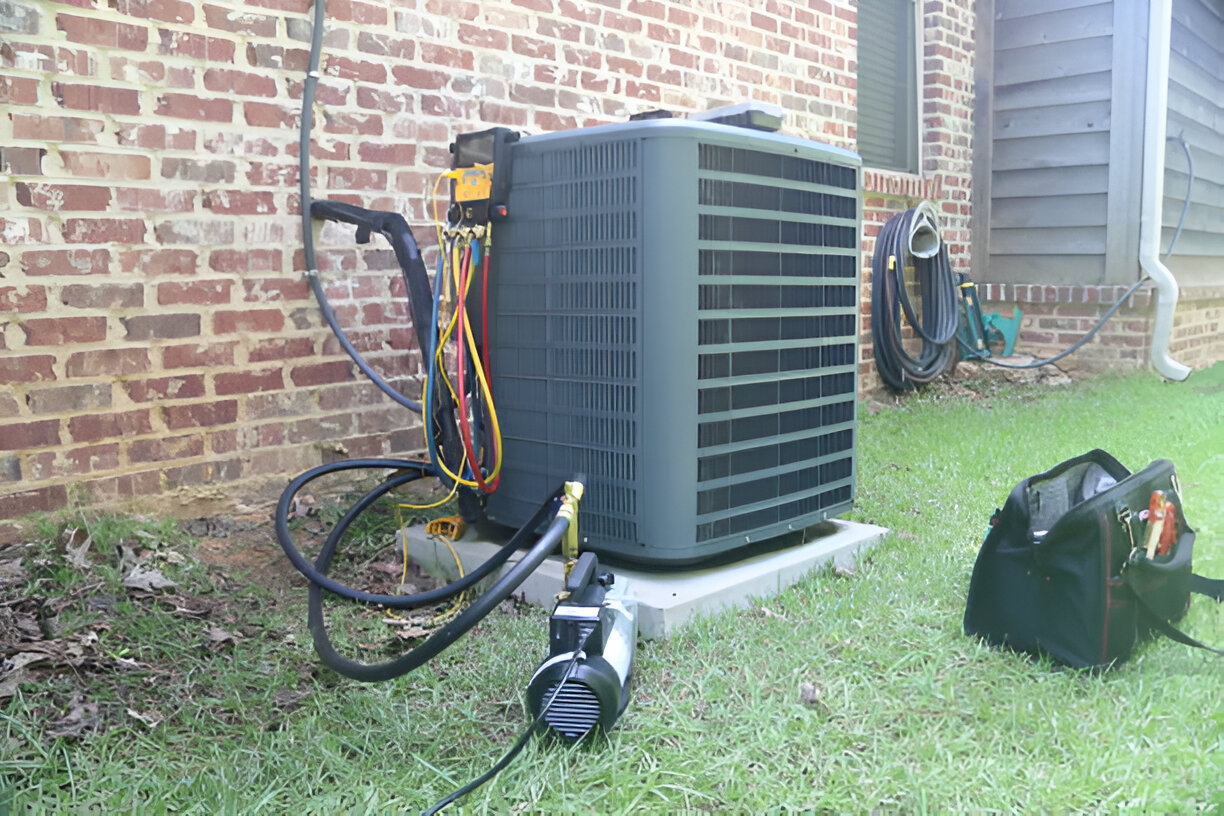
Why timely heat pump repair matters in Montgomery, TX
Montgomery’s high humidity and long cooling season mean heat pumps run harder and longer than in cooler climates. That increases wear on compressors, fan motors, and electrical components. Delaying repairs can turn a minor refrigerant leak or capacitor problem into a compressor failure or complete system shutdown. Prompt diagnosis and repair restore comfort, prevent higher energy costs, and extend system life.
Common heat pump problems in Montgomery, TX
- Compressor failure — Symptoms include weak airflow, little or no cooling/heating, high utility bills, and loud clanking or humming. Florida and Gulf Coast area humidity can accelerate compressor stress.
- Refrigerant leaks — Low refrigerant reduces efficiency and cooling capacity. Signs include frost on lines, hissing noises, and longer run cycles.
- Electrical issues — Tripped breakers, failed capacitors, relays/contactors, or damaged control boards from storms or age are frequent problems.
- Thermostat faults — Incorrect readings, short cycles, or unresponsive controls may be thermostat-related rather than the heat pump.
- Airflow and blower problems — Dirty filters, blocked return vents, or failing blower motors cause reduced airflow and evaporator coil freezing in humid weather.
- Defrost system or reversing valve failures — Especially relevant in cooler months when the system must manage frost buildup.
- Outdoor fan or motor failures — Debris, pollen, and storm damage can foul or damage outdoor units.
How a professional diagnostic works
- Initial symptom intake — Technician documents temperature performance, noises, runtime, and recent events (power outages, storms).
- Visual and safety checks — Inspect breaker, disconnect, wiring, condensate drain, filters, and outdoor unit condition.
- Electrical testing — Measure voltage, capacitors, contactors, and motor current to isolate electrical faults.
- Refrigerant and pressure checks — Attach gauges to verify charge and detect pressure anomalies that indicate leaks or blockages.
- Airflow and temperature split — Measure supply/return temps and airflow to pinpoint duct, blower, or coil problems.
- Leak detection (if needed) — Use electronic detectors, UV dye, or soap testing to locate refrigerant leaks.
- Written estimate — After diagnosis, receive a clear explanation of the problem, repair options, parts needed, and an estimated timeframe.
Typical diagnostic visits take about 45 to 90 minutes depending on system complexity and access.
Repair services and common solutions
- Compressor replacement or repair — When compressors fail, replacement is common; technician will explain when repair vs replacement makes sense given system age and efficiency.
- Refrigerant leak repair and recharge — Locate and seal leaks, evacuate and recharge to manufacturer specifications, and test for proper operation.
- Electrical component replacement — Replace capacitors, contactors, transformers, and control boards with properly rated parts.
- Thermostat replacement and calibration — Install and configure modern programmable or smart thermostats for accurate control.
- Fan and blower motor service — Repair or replace outdoor fan motors and indoor blower motors; clean or replace blower wheels.
- Defrost and reversing valve repair — Replace sensors, timers, or valves as needed to restore heating performance in cooler weather.
- Ductwork and airflow fixes — Recommend and perform adjustments to improve airflow and prevent coil freeze-ups.
All repairs are performed with safety and code compliance in mind; refrigerant work follows EPA handling requirements.
Emergency heat pump repair in Montgomery
Emergency problems—no heat on a cold night or no cooling during extreme summer heat—require expedited service. Emergency response availability varies by provider, but priority is typically given to life-safety and severe comfort failures, especially during heat waves or after storms. Expect faster response windows during these peak need periods.
Parts replacement policy and warranty information
Standard practice is to use OEM or manufacturer-equivalent replacement parts for longevity and compatibility. Repaired systems come with a workmanship warranty, and replacement parts carry the manufacturer’s warranty. Warranty terms depend on the part manufacturer and the repair scope; the diagnostic report will include warranty details for both labor and parts so you understand post-repair coverage.
Technician qualifications and safety standards
Professional technicians servicing heat pumps should be:
- EPA-certified for refrigerant handling
- Trained on modern heat pump systems and controls
- Knowledgeable about local codes and safety practices
- Background-checked and continuing education-focusedTechnicians use proper PPE, lockout/tagout procedures for electrical safety, and calibrated testing equipment to ensure accurate diagnosis and reliable repairs.
Expected timelines and pricing considerations
- Minor repairs (capacitor, contactor, thermostat, filter/airflow issues): often completed within 1 to 3 hours on-site.
- Moderate repairs (fan motor, refrigerant leak repair, circuit board): may range from a few hours to next-day completion if parts are on hand.
- Major repairs or compressor replacements: can require parts ordering and coordination, typically 1 to several business days depending on part availability.
Pricing varies widely based on system make/model, accessibility, needed parts, refrigerant type, emergency timing, and any warranty coverage. A transparent written estimate provided after diagnostics will outline parts, labor, and expected time to completion.
Simple preventive tips for Montgomery homeowners
- Replace filters regularly (every 1–3 months) to reduce coil and blower strain.
- Keep 2–3 feet of clearance around the outdoor unit and remove debris, leaves, and pollen buildup.
- Schedule professional maintenance twice a year (spring and fall) to catch issues before peak seasons.
- Monitor for longer run times, odd noises, or uneven heating/cooling and arrange a diagnostic when those first appear.
Scheduling service: what to have ready
When arranging a diagnostic appointment, have the following information available:
- Heat pump make, model, and approximate age (from the unit nameplate)
- A description of symptoms, unusual noises, and when the issue began
- Recent weather events or power outages
- Preferred availability windows and whether service is urgent
A proper diagnostic will result in a clear repair plan, parts/warranty details, and an estimated completion timeframe so you can make an informed decision about repair or replacement for your Montgomery home.
Maintenance Plan You Can Rely On
Basic Care
Perfect for newer systems or budget-conscious homeowners wanting essential protection.
$149/year

Annual comprehensive system inspection
Filter replacement (standard filters included)
15% discount on repairs
Priority scheduling within 48 hours
Premium Protection
Ideal for homes with systems 5+ years old or with moderate usage patterns.
$249/year

Bi-annual system inspections (spring & fall)
Filter replacement (premium filters included)
25% discount on all repairs
Priority scheduling within 24 hours
Free diagnostic fees ($89 value)
Elite Coverage
Best for older systems, luxury homes, or properties with critical climate control needs.
$349/year
Quarterly system inspections
All filters and minor parts included
30% discount on major repairs
Same-day emergency service
Extended 2-year warranty on repairs
Annual system efficiency optimization
Basic Care
Perfect for newer systems or budget-conscious homeowners wanting essential protection.
$149/year
Annual comprehensive system inspection
Filter replacement (standard filters included)
15% discount on repairs
Priority scheduling within 48 hours
Premium Protection
Ideal for homes with systems 5+ years old or with moderate usage patterns.
$249/year
Bi-annual system inspections (spring & fall)
Filter replacement (premium filters included)
25% discount on all repairs
Priority scheduling within 24 hours
Free diagnostic fees ($89 value)
Elite Coverage
Best for older systems, luxury homes, or properties with critical climate control needs.
$349/year
Quarterly system inspections
All filters and minor parts included
30% discount on major repairs
Same-day emergency service
Extended 2-year warranty on repairs
Annual system efficiency optimization
Hear What Our Satisfied Clients Have To Say